
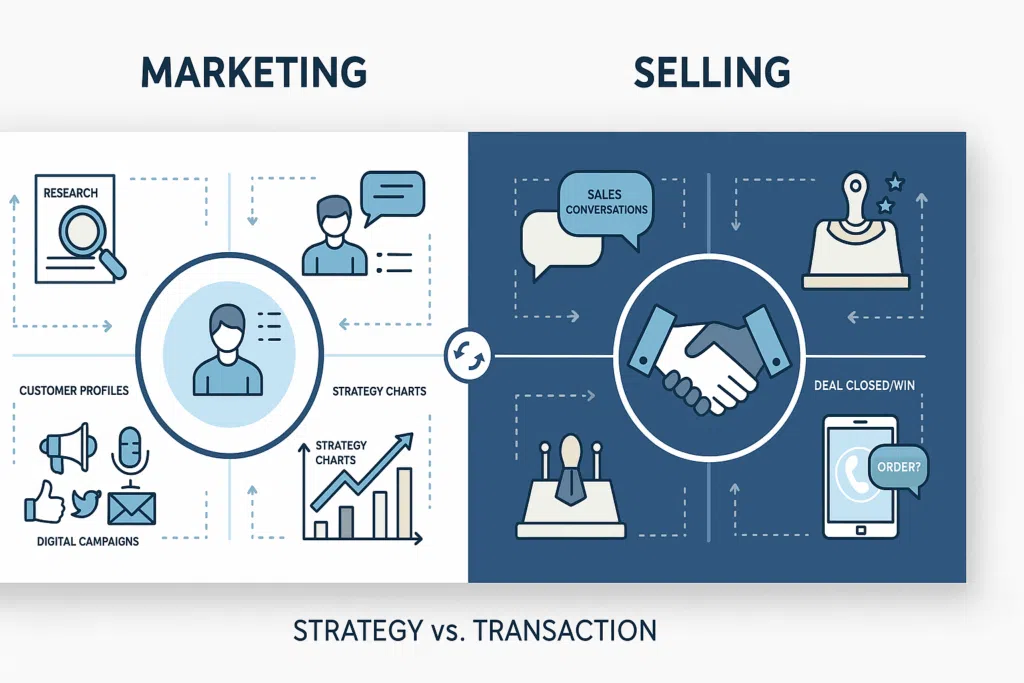
Many people use the words marketing and selling interchangeably but they’re actually two very different parts of running a business. Understanding the difference is essential for any organisation that wants to attract the right customers and grow sustainably. In simple terms, marketing shapes what the customer wants, while selling helps the customer make the final decision.
Let’s break it down.
What Exactly Is Marketing?
Marketing is all about getting to know your customer before you even think about the product. It involves research, planning, analysis and communication. The aim is to understand what people truly need and then develop a product or service that fits naturally into their lives.
Good marketing asks:
What problem are we solving? Who are we helping? How can we reach them in the most meaningful way?
It’s strategic, long-term and influences everything from product development to brand messaging.
What Exactly Is Selling?
Selling steps in once interest has been created. It’s the direct process of guiding someone towards a purchase. This includes explaining features, answering questions, overcoming hesitation and making sure the customer feels comfortable with their choice.
Selling is practical, immediate and heavily focused on communication skills.
The Key Differences Between the Two
1. Marketing Starts With the Customer, Selling Starts With the Product
Marketing begins by listening. It studies what customers want, what challenges they face and how a product can genuinely help them.
Selling begins with what already exists. The goal is to present the product clearly and persuade someone to buy it.
Example:
A small bakery surveys its customers and discovers they want a healthier breakfast option for busy mornings. The team then creates a low-sugar, oat-based bar tailored to that need.
Without marketing, the bakery would simply put the bar on the shelf and hope people buy it.
2. Marketing Creates Demand, Selling Converts It
Marketing builds awareness and generates curiosity. It tells a story, highlights benefits and helps people see why a product matters.
Selling takes that interest and turns it into action.
Example:
A home accessories brand posts videos showing how a touch-controlled lamp makes reading at night easier. Once viewers are intrigued, a salesperson helps them choose the right size or style.
3. Marketing Plans the Strategy, Selling Delivers the Action
Marketing involves research, product testing, messaging and launch planning.
Selling involves conversations, demonstrations, handling objections and closing sales.
Both are essential: one sets the direction, the other drives the result.
Conclusion
Marketing and selling are connected but they serve different purposes. Marketing lays the foundation by understanding the customer and shaping products to their needs. Selling builds on that foundation, helping customers take the final step. When both functions work together, businesses can create real value, build trust and grow sustainably.
With years of industry experience and a passion for driving digital success, Aimee Digital Marketing is your trusted partner for digital marketing. From eye-catching graphic design and responsive website development to strategic social media management, engaging content creation and effective email marketing, we provide comprehensive solutions to help your brand grow and thrive online. For any enquiries or assistance, call us at 0203 038 3388. Follow us on Facebook, Instagram, TikTok and YouTube to stay updated with our latest work and digital marketing tips.