
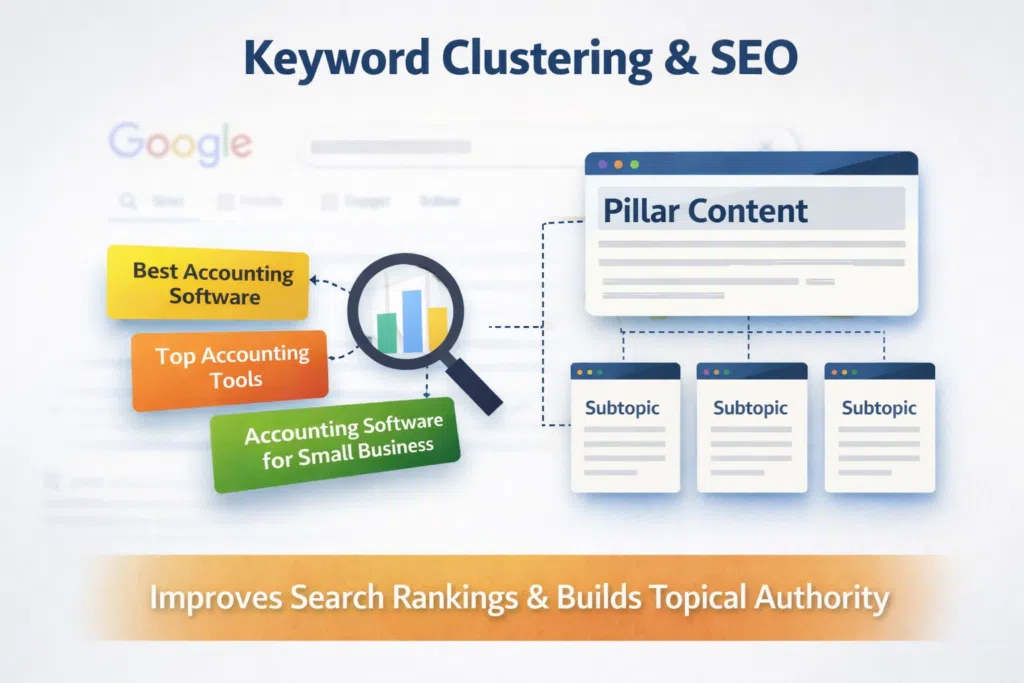
Keyword clustering is a modern SEO technique that groups related search terms based on shared search intent. Rather than optimising a separate page for every individual keyword, this approach allows a single page to target multiple relevant queries in a structured and meaningful way. As search engines have become more sophisticated, keyword clustering has become an essential part of building strong, future-proof SEO strategies.
What Is Keyword Clustering?
Keyword clustering is the process of organising similar keywords into groups that reflect the same user intent. These keywords may vary slightly in wording, length, or phrasing but they all point to the same underlying search goal.
For example, terms such as “best accounting software”, “top accounting tools” and “best accounting software for small businesses” all suggest that the user is comparing solutions. Instead of creating multiple competing pages, these keywords can be targeted together within one well-structured piece of content.
This method helps search engines understand the full scope of a page’s topic while ensuring users receive comprehensive answers to their queries.
Why Keyword Clustering Matters for SEO
Search engines no longer rank pages based solely on exact keyword matches. Instead, they assess how well a page satisfies search intent and covers a topic in depth. Keyword clustering aligns content creation with this approach.
By grouping related keywords, you reduce the risk of keyword cannibalisation, where multiple pages compete for the same search terms. It also enables you to produce more authoritative content by addressing a topic thoroughly rather than spreading information across several thin pages.
From a user perspective, clustered content improves clarity and usability. Visitors are more likely to find what they need on a single page, which can increase engagement and reduce bounce rates both positive signals for SEO performance.
How Keyword Clustering Supports Topical Authority
Keyword clustering plays a key role in building topical authority. When your website consistently publishes well-structured content around related themes, search engines begin to recognise it as a reliable source within that subject area.
This is often achieved through topic clusters, where a main pillar page covers a broad topic and supporting pages explore related subtopics in more detail. Strategic internal linking between these pages strengthens site structure and helps search engines understand how content is connected.
Over time, this approach can improve visibility across a wide range of related search terms, including competitive and long-tail keywords.
Best Practices for Effective Keyword Clustering
Successful keyword clustering starts with thorough keyword research. Identify a primary keyword for each cluster and support it with closely related secondary keywords that share the same intent.
Always review search results to confirm intent alignment. Keywords that appear similar may trigger different types of content in search engine results and should not always be grouped together.
Content should be written naturally, with keywords incorporated in headings, body text and metadata where relevant. The goal is clarity and usefulness, not repetition.
Finally, performance should be reviewed regularly using tools such as Google Search Console. Monitoring impressions, clicks and rankings helps identify opportunities for refinement and expansion.
Conclusion
Keyword clustering reflects how modern search engines evaluate relevance and quality. By focusing on intent-driven keyword groups rather than isolated terms, businesses can create more authoritative content, improve user experience and achieve stronger, more sustainable SEO results.
With years of industry experience and a passion for driving digital success, Aimee Digital Marketing is your trusted partner for digital marketing. From eye-catching graphic design and responsive website development to strategic social media management, engaging content creation and effective email marketing, we provide comprehensive solutions to help your brand grow and thrive online. For any enquiries or assistance, call us at 0203 038 3388. Follow us on Facebook, Instagram, TikTok and YouTube to stay updated with our latest work and digital marketing tips.