
Organic traffic is no longer behaving the way it used to. Many websites are reporting steady impressions but declining clicks, even when rankings appear strong. This shift isn’t accidental, it reflects a fundamental change in how people interact with search.
Users increasingly expect instant, well-structured answers without the need to browse multiple pages. Search platforms have adapted to this behaviour by surfacing summaries, explanations and recommendations directly within results. As a consequence, traditional SEO tactics are losing some of their impact.
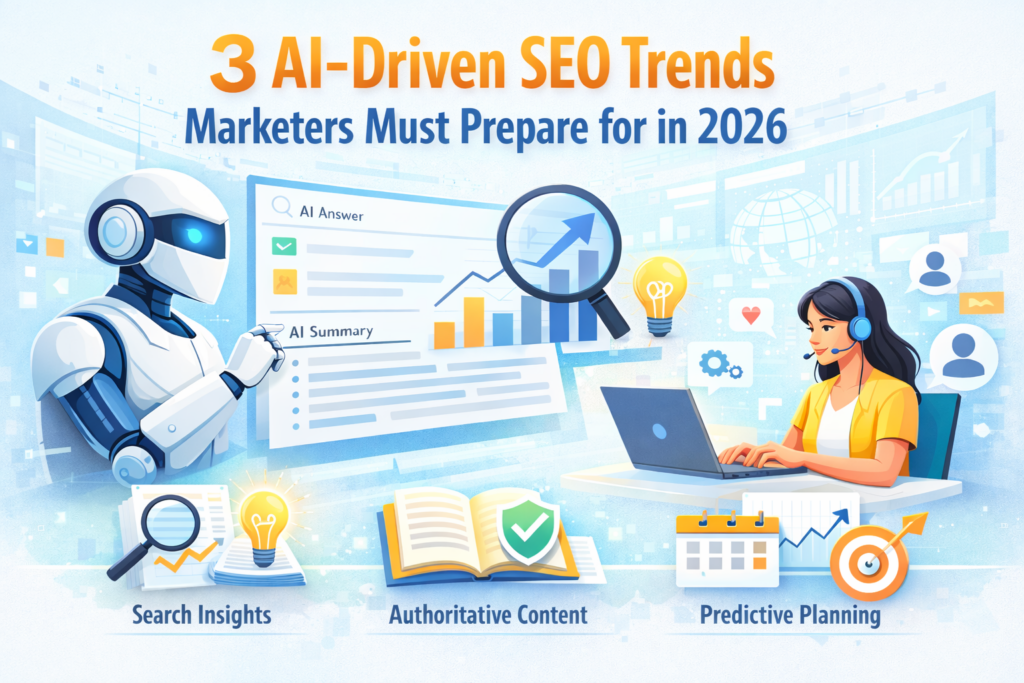
To remain visible in 2026, digital marketers must rethink how content is created, structured and measured. Below are three key SEO trends reshaping organic performance and how brands can respond strategically.
1. Search Visibility Beyond the Click
Search engines are no longer just gateways to websites; they are becoming destinations in their own right. Users often receive enough information directly on the results page to satisfy their query, reducing the need to click through.
This does not mean SEO is dying but it does mean visibility must be redefined.
Modern optimisation focuses on being referenced, summarised, or quoted, not just ranked. Content that clearly answers questions, explains concepts, or defines processes stands a far greater chance of being surfaced within enhanced search features.
To adapt, marketers should prioritise:
- Clear, direct explanations early in the content
- Logical formatting using headings and short sections
- Language that reflects how real people ask questions
Brands that consistently appear within these prominent result features benefit from increased recognition and trust, even when clicks are lower. In many industries, this form of visibility now plays a critical role in influencing buying decisions.
2. Authority-Led Content Is Outperforming Volume
Search systems are becoming far more selective about which sources they rely on. Rather than rewarding sheer content output, they increasingly favour credible, experience-led material that demonstrates subject-matter understanding.
This shift places greater emphasis on quality signals such as:
- Demonstrable expertise
- First-hand insight or professional experience
- Accurate, well-supported information
- Consistency of topic focus
Thin content created purely to target keywords is steadily losing ground. In contrast, in-depth resources that genuinely educate or guide users are far more likely to be referenced and trusted.
For businesses, this means investing in fewer but stronger pieces of content, ones that reflect real industry knowledge, answer complex questions and are written with authority rather than automation in mind.
Over time, this approach strengthens brand credibility and positions websites as dependable sources rather than content farms.
3. Smarter SEO Planning Through Predictive Insight
SEO in 2026 is becoming less reactive and more anticipatory. Instead of responding to trends once they peak, successful marketers are planning content around emerging demand.
By analysing historical behaviour patterns and shifts in user interest, marketers can identify topics that are likely to grow in relevance before competition intensifies. This allows businesses to publish content at the right moment not too early and not too late.
The advantages of this approach include:
- Reduced competition for high-value topics
- Stronger early positioning and visibility
- Content that aligns more closely with user intent
Predictive planning also supports better alignment between SEO, content marketing and commercial goals. When done correctly, it transforms SEO from a tactical exercise into a long-term growth strategy.
Preparing for the Next Phase of Search
Search optimisation is no longer just about rankings, backlinks, or keywords in isolation. It is about clarity, credibility, and timing.
As search platforms continue to evolve, brands that adapt their content strategies accordingly will remain visible even as user behaviour changes. Those that rely on outdated tactics may find their organic performance slowly eroding.
By focusing on meaningful visibility, authoritative content and forward-looking planning, digital marketers can build SEO strategies that remain effective well beyond 2026.
Conclusion: SEO Success in 2026 Requires Strategic Adaptation
The evolution of search is not a passing trend but a long-term shift in how information is discovered, interpreted and trusted. As organic traffic patterns continue to change, businesses must look beyond traditional performance metrics and focus on sustainable visibility and authority.
Success in 2026 will belong to brands that produce clear, credible content, understand their audience’s intent and plan strategically rather than reactively. Optimising for how search platforms surface and reference information is now just as important as ranking itself. By prioritising quality over quantity, strengthening topical authority and aligning content with emerging user needs, digital marketers can future-proof their SEO efforts.
With years of industry experience and a passion for driving digital success, Aimee Digital Marketing is your trusted partner for digital marketing. From eye-catching graphic design and responsive website development to strategic social media management, engaging content creation and effective email marketing, we provide comprehensive solutions to help your brand grow and thrive online. For any enquiries or assistance, call us at 0203 038 3388. Follow us on Facebook, Instagram, TikTok and YouTube to stay updated with our latest work and digital marketing tips.