
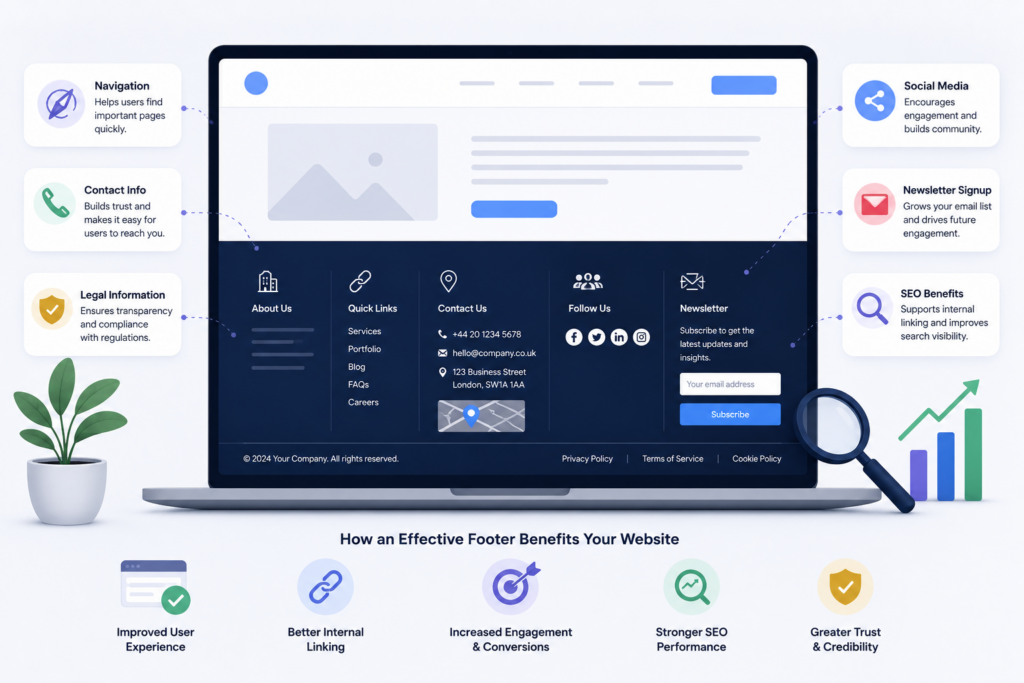
Many website owners focus their attention on headers, navigation menus and homepage content, often overlooking the footer entirely. However, the footer plays a significant role in helping visitors navigate your website, access important information and complete desired actions.
As users reach the bottom of a page, the footer provides a natural opportunity to guide them towards relevant resources, contact information or conversion-focused content. It acts as a final point of engagement, helping visitors continue their journey rather than leaving the site.
A well-structured footer can:
- Improve website navigation
- Increase user trust and credibility
- Support accessibility and usability
- Strengthen brand consistency
- Contribute to search engine optimisation efforts
Essential Components of an Effective Website Footer
Clear Navigation Links
A footer should provide convenient access to important sections of your website. While it should not replicate the main navigation entirely, it should include links that visitors frequently need.
Common examples include:
- About Us
- Services
- Contact Us
- Blog or Resources
- FAQs
- Careers
- Privacy Policy
- Terms and Conditions
By offering these links in a consistent location, users can quickly find information without having to return to the top of the page.
Company Information and Contact Details
Providing clear contact information enhances credibility and reassures visitors that your business is legitimate and accessible.
Depending on your organisation, this may include:
- Business address
- Telephone number
- Email address
- Business registration details
- Opening hours
For businesses serving specific geographical areas, displaying accurate location information can also support local search visibility.
Brand Identity
Your footer should remain visually aligned with the rest of your website. Consistent branding helps reinforce recognition and professionalism.
Consider including:
- Company logo
- Brand colours
- Consistent typography
- Brand messaging or mission statement
Maintaining visual consistency creates a cohesive experience across the entire website.
Social Media Links
Social media icons provide visitors with additional ways to engage with your business beyond the website itself.
Only include platforms that are actively maintained. Directing users to outdated or inactive profiles can undermine credibility and reduce trust.
Newsletter Subscription Opportunities
The footer is an ideal location for email subscription forms. Visitors who have engaged with your content may be more willing to subscribe once they reach the end of the page.
An effective newsletter section should:
- Request minimal information
- Clearly explain the benefits of subscribing
- Be simple and unobtrusive
This approach can help generate qualified leads without disrupting the user experience.
Legal and Compliance Information
Modern websites must provide access to important legal documentation. The footer is the standard location for these resources.
Typically, this includes:
- Privacy Policy
- Cookie Policy
- Terms and Conditions
- Accessibility Statement
- Data Protection Information
Providing these links demonstrates transparency and helps meet regulatory requirements.
How Website Footers Support SEO
Website footers can contribute positively to search engine optimisation when implemented thoughtfully and responsibly.
Strengthening Internal Linking
Internal links help search engines understand the structure and hierarchy of your website. Footer links can reinforce access to important pages that may not always receive direct traffic.
Examples include:
- Service pages
- Resource centres
- Industry-specific content
- Support pages
Strategic internal linking can improve discoverability while helping users access relevant information more efficiently.
Supporting Website Crawlability
Search engines rely on links to discover and index content. A well-organised footer can help ensure important pages remain accessible and easily crawled.
This is particularly beneficial for larger websites with extensive content libraries or complex site structures.
Enhancing Local Search Visibility
Businesses targeting local markets can benefit from displaying consistent contact information within the footer.
Including:
- Business name
- Address
- Telephone number
helps reinforce local relevance and supports local SEO initiatives when aligned with information across other online platforms.
Improving User Engagement Signals
User experience and search performance are closely connected. A footer that helps visitors find relevant content may encourage:
- Longer browsing sessions
- Additional page views
- Reduced abandonment rates
These positive engagement signals can contribute to overall website effectiveness and support broader SEO objectives.
Common Footer Design Mistakes
Including Excessive Links
Adding too many links can create confusion and reduce usability. Visitors should be able to identify important information quickly without navigating through a cluttered footer.
Focus on quality rather than quantity.
Ignoring Mobile Users
A footer that works well on desktop devices may become difficult to use on smaller screens.
Ensure that:
- Links remain easy to tap
- Text remains readable
- Content stacks logically on mobile devices
Responsive design is essential for maintaining a positive experience across all devices.
Outdated Information
Contact details, social media links and legal information should be reviewed regularly.
Outdated content can create frustration, damage credibility and negatively affect user trust.
Poor Accessibility
Accessible design benefits all users.
Footer content should feature:
- Clear contrast between text and background
- Descriptive link text
- Keyboard navigation support
- Appropriate heading structure
Accessibility improvements contribute to better usability and compliance with recognised standards.
Inconsistent Branding
A footer that appears disconnected from the rest of the website can create a fragmented user experience.
Maintain consistency in colours, typography and visual style to reinforce your brand identity.
Best Practices for Website Footer Design
To maximise the value of your footer:
- Keep the layout organised and easy to scan
- Prioritise important links and information
- Maintain consistent branding
- Ensure full mobile responsiveness
- Include clear contact details
- Provide access to legal documentation
- Regularly review and update content
- Consider accessibility requirements from the outset
A footer should support users rather than overwhelm them.
Final Thoughts
Website footers are often underestimated, yet they play a crucial role in navigation, credibility, user engagement and search performance. A thoughtfully designed footer helps visitors access important information, strengthens brand trust and contributes to a more seamless browsing experience.
Rather than treating the footer as an afterthought, businesses should view it as a strategic component of website design. By focusing on usability, clarity and structure, you can create a footer that serves both your audience and your wider digital objectives effectively.
When executed correctly, a website footer becomes more than a simple end point, it becomes a valuable extension of your website’s overall user experience and performance strategy.
With years of industry experience and a passion for driving digital success, Aimee Digital Marketing is your trusted partner for digital marketing. From eye-catching graphic design and responsive website development to strategic social media management, engaging content creation and effective email marketing, we provide comprehensive solutions to help your brand grow and thrive online. For any enquiries or assistance, call us at 0203 038 3388. Follow us on Facebook, Instagram, TikTok and YouTube to stay updated with our latest work and digital marketing tips.